Read a new original book: Air and Screen - Combined History of Aviation and the Media

Read a new original book: Air and Screen - Combined History of Aviation and the Media
Read ''Air and Screen'' in Amazon Kindle

Sunday, February 16, 2025

The Natural Amphitheater of Haifa Bay


The amphitheater offers an oblique design compromise between the horizontal and vertical dimensions of space. It is a structure built in the shape of a semicircle or a complete circle, with seats on a downward slope toward a stage in the lower center.

In the Hellenistic era, amphitheaters were an important part of life. They served as social and cultural centers, providing entertainment and enjoyment for people from all backgrounds, through gladiatorial combats, sporting events, and theatrical performances. After the fall of the Roman Empire, the many amphitheater structures built in every city were neglected.


The ancient amphitheater in Epidauros, Greece


In the modern city, ancient amphitheaters, like in Caesarea, have been renovated and have become a symbol of history, culture, and community. Today they are used to host cultural performances such as music, dance, and theater.

Nowadays, new amphitheaters are also being built for various purposes. The football stadium is the largest, most common, and most important of these.

Port cities that spill into a bay, like Rio de Janeiro and Haifa, have a topographical structure of a natural amphitheater. In Haifa, the stands are the hills of the Galilee and Carmel, and the stage in the lower center is the Zvulun Valley, the bay, and the ports. Metropolitan planning must be based on this principle.


Rio de Janeiro


The natural continuation of the natural amphitheater is from the seashore towards the underwater world. The underwater world is a mirror image of the world above ground. Coral reefs are underwater amphitheaters, where colorful fish swarm in spectacular landscapes.


Diver above a coral reef


Haifa is a natural amphitheatre metropolis, and may thrive as an international cultural, commercial and tourist center, if it makes the best use of its unique natural resources, of harmony between the sea, the mountain and the valley.


A vision for the development of the Haifa


Tuesday, January 14, 2025

How Technicolor Helped Defeat the Nazis


Some thinkers argue that the Nazis aspired to reshape occupied Europe according to their own cinematic vision, and Technicolor, an advanced American color technology, was among the factors that contributed to their downfall. This was due to Technicolor's superior quality compared to the parallel German color technology, Agfacolor.

Cinema played a central role in World War II, serving as a powerful propaganda tool for both the Allies and the Nazis. Color films, with their more realistic representation of the world, allowed viewers to connect with the story more deeply, evoke a wider range of emotions, and shape their perception of reality.

Colorful Hollywood films, shot in Technicolor, portrayed the United States as a technological and cultural powerhouse, encouraged enlistment in the military, contributed to national unity, and rallied support for the war effort. Moreover, in a world that had become "cinematic," where cinematic images shaped reality more than ever, the Nazis adopted their own cinematic worldview and systematically applied it to all aspects of life, including the planning and implementation of the Final Solution.  Attention to visual appearance characterized all stages of the Nazi mechanism, from concentration camps to extermination camps.

Color enhanced the perception of perspective, the human ability to understand and deal with concepts and problems in three-dimensional space. In this way, color gave films depth and an added dimension, which strengthened their impact on viewers. In occupied European countries, such as France, where American films were screened alongside German films, the technological quality of color served as a measure of each power's superiority.

Epic widescreen films, both American and German, used color to enhance the viewing experience and give historical and mythological stories greater credibility and effectiveness. Color added great value to these films in the eyes of viewers and helped them connect with the content and messages conveyed. Moreover, color allowed the "flight of the human spirit," a recurring motif in many children's and youth films, to be presented in a more convincing and vivid way, thereby reinforcing the message of freedom and hope.

In conclusion, while it is difficult to argue that Technicolor alone decided the war, there is no doubt that its superior quality contributed to the propaganda and cultural superiority of the United States and helped it achieve victory not only on the battlefield but also in the battle for public opinion.


From Technicolor to ILM
There is a certain similarity between the impact of Technicolor in World War II and the impact of George Lucas's Industrial Light & Magic (ILM) technology. In both cases, innovative and groundbreaking American technology contributed to establishing the United States' status as a leading power. Technicolor gave Hollywood films a significant visual advantage, and ILM revolutionized special effects in cinema. Both technologies greatly influenced popular culture. Technicolor created a rich and spectacular viewing experience, and ILM opened up a new world of visual possibilities in film and television. Both technologies contributed to the image of the United States as an innovative and creative power, capable of leading in technological and cultural fields.


Saturday, January 11, 2025

Quantum Theory, Computing and Flight

 
Cinema and aviation, two revolutions that transformed the 20th century, have woven a unique and fascinating bond. Aviation, as a symbol of innovation and freedom, has provided cinema with endless inspiration, while cinema, as a medium of immense cultural power, has shaped our perception of aviation and its relentless pursuit of progress.
Aviation, representing innovation, freedom, and adventure, has served as a wellspring of inspiration for countless stories in cinema. From adrenaline-fueled action films set in the skies to romantic dramas unfolding against the backdrop of long flights, aviation has provided cinema with a diverse range of settings, plots, and unforgettable characters. 
Simultaneously, cinema has shaped cultural perceptions of aviation, often portraying it as a glamorous and exhilarating activity. Cinematic images of heroic pilots and elegant flight attendants have profoundly influenced how people perceive the world of aviation.
Cinema and aviation together have sparked inspiration and innovation  in various fields. Science fiction films have presented futuristic visions of spaceflight, igniting the imaginations of scientists and engineers, politicians and educators.
Cinema and aviation, much like the Age of Exploration and the Renaissance, are distinct expressions of humanity's ceaseless drive to innovate, explore, and transcend boundaries. Aviation, akin to the voyages of the explorers during the Age of Discovery, has enabled humanity to reach new horizons, quite literally, and expand its perspectives. Cinema, like the perspective and art of the Renaissance, has opened a window into new worlds of imagination and creation, shaping our perception of reality. Now, quantum theory represents the new "Age of Exploration", promising breakthroughs in science, medicine, and technology.  Similar to these historical periods, it challenges the limits of our thinking and invites us to envision a future where possibilities once deemed impossible become reality.
The connection between quantum computing and the Renaissance period might seem tenuous at first glance, yet a central point of similarity lies in their emphasis on three-dimensionality as a key tool for understanding the world.
In the Renaissance, the discovery of scientific perspective allowed artists to represent the world more realistically, utilizing depth and three-dimensionality in their paintings. This breakthrough led to a revolution in art, architecture, and the perception of space in general.
Similarly, quantum computing is based on quantum principles that enable the representation of information in a more complex and multi-dimensional manner than classical computing. This ability to process information in such a way opens doors to unprecedented developments in numerous fields, from medicine (developing new drugs) and materials science, from creating materials with enhanced properties to the discovery of new scientific breakthroughs. Just as the Age of Exploration, where 3D, in the sense of mapping the world and understanding its spherical shape, led to the discovery of new places and broadened horizons, so too might quantum computing, with its unique multi-dimensional capabilities, lead us to a new era of discoveries and technological advancements.
Quantum computing is a groundbreaking field that harnesses the principles of quantum mechanics, which is based on the electrons of an atom, rearranged to perform calculations. Unlike conventional computers that rely on "bits" which can only be 0 or 1, quantum computers utilize "qubits''. These qubits can exist in a state of superposition, meaning they can be both 0 and 1 simultaneously. Another unique property of qubits is "entanglement", which allows them to be intimately linked, so that an action on one qubit instantaneously affects all other entangled qubits, regardless of the distance between them.
This computation is carried out in conditions of near absolute zero temperature, which provides the electrons with a stable three-dimensional environment. Their operation within this three-dimensional space allows them to encompass any subject from all angles. The result is that they are capable of creating a perfect representation of reality.  Because of this, some researchers compare the operation of a quantum computer to the operation of the entire universe.
It will be possible to create an accurate picture of the world through them, since their computing units are electrons, like the atomic particles that make up the universe.
The size of quantum computers is growing exponentially. This is due to their fundamental structure, which is based on qubits. Unlike bits in classical computers, which can only be 0 or 1, qubits can be 0, 1, or both simultaneously. This unique property, which allows quantum computers to represent multiple values at the same time, means that as more qubits are added to a quantum computer, the number of possible states increases exponentially. For example, a quantum computer with 3 qubits can be in one of 8 possible states, while a quantum computer with 30 qubits can be in one of a billion possible states.
As a result, the power of a quantum computer is millions of times greater than that of a classical computer. Problems that would take today's supercomputers many years to solve, or that they are not capable of solving at all, can be solved by a quantum computer in an instant.
In the realm of the personal online universe, quantum computing will have a profound impact. Higher quality streaming, coupled with new algorithms for data analysis and machine learning, will enhance the ability of social networks and artificial intelligence applications to understand users and provide them with personalized content. Virtual reality worlds will become far more realistic. Telepathic communication, and even interstellar communication, will become practical.
One of the most prominent areas where quantum computing may greatly assist is in the development of atomic fusion reactors, which produce controlled atomic energy, in contrast to the atomic bomb that releases uncontrolled energy. Already today, such experimental reactors produce, for a very short time, a greater amount of energy than that required to produce it. Such reactors could be used to produce unlimited electricity. Such a fusion reactor could also be used as an engine for aircraft.
In the field of cinema, quantum computing will enable the creation of virtual worlds, animations, and special effects that are far more realistic and spectacular. Films in three-dimensional holograms that look exactly like reality, from a different angle on each side, without the need to use 3D glasses, will be perfected. Autonomous creation of films, whereby the filmmaker feeds a few minimal basic data into the computer, and it uses them to create a long and detailed film, will be easy and impressive.
The development and implementation of quantum computers is already well underway. Governments of superpowers like the US and China, companies like Google and Microsoft, and various research institutes have already established quantum computers with substantial investments. There is intense competition in this field, based on the certainty that whoever dominates this domain will also dominate global science and technology, security and cyber, energy, and economy. The development of metals and medicines, engineering and economic calculations, algorithms and encryption, are some of the immediate areas where quantum computing has the potential to revolutionize.
The quantum revolution is a foreseeable and well-founded process that has passed the experimental stage. The expectation is that by 2030 they will become widespread, and their areas of application will greatly expand, with interaction with them becoming as commonplace as with classical computers.


The Land Link to the Gulf: Dream or Mirage?


The war in Gaza is perceived as an initiative of Hamas, unrelated to Egypt or the peace initiative between Israel and Saudi Arabia, which includes a proposal to create an alternative to the Suez Canal through a land route across Saudi Arabia, connecting the Persian Gulf to the Mediterranean Sea. This is despite the fact that past experience has shown the difficulties involved in replacing major waterways. Examples include: Turkey - attempting to promote the construction of a canal to compete with the Bosphorus Strait; Nicaragua - a Chinese initiative to dig a canal to compete with the Panama Canal is facing difficulties; Thailand - a plan to dig a canal as an alternative to the Strait of Malacca is encountering resistance. Past experience shows that such initiatives struggle to materialize, due to geopolitical and economic concerns.

Admittedly, the projects mentioned are indeed different from a land route, such as one that would connect the Persian Gulf to the Mediterranean Sea. These are alternative waterways, while the proposed land route is of a completely different kind. For example, the railway line in Mexico, which connects the Pacific Ocean to the Atlantic Ocean and competes with the Panama Canal in the field of container traffic. However, it is important to note that land routes can also compete with sea routes, and sometimes even be a more convenient alternative. Indeed, the establishment of a land route may arouse less opposition compared to an alternative sea route, partly because it is less threatening to the interests of the countries controlling the existing sea routes, mainly because the volume of traffic on a land route is lower than on a sea route. Nevertheless, any transportation project of international scale, aimed at competing with an existing route, is expected to raise significant objections and difficulties, both geopolitically and economically. This is also due to the uncertainty surrounding the future of container traffic, which is becoming autonomous.

Control of major waterways is a significant source of power, and the superpowers do not give it up easily. The connection of international waterways to large-scale international conflicts is extensive. Examples: China is trying to expand its influence in strategic areas, including important waterways, and its struggle for control of the South China Sea is linked to control of the Strait of Malacca. The United States views the Panama Canal as an international waterway that is a strategic asset and vital to maintaining world order, and there are growing calls to restore sovereignty over the canal. It may oppose initiatives that could threaten the existing balance in freedom of navigation.

From the perspective of a power like Russia, the transition from an international waterway like the Bosphorus Strait to a national waterway west of Istanbul, as Turkey aspires to build, may be interpreted as a partial loss of its freedom of movement. Here are a few reasons why: Control - national waterways are under the exclusive control of the countries through which they pass. These countries can impose restrictions, fees, or even close the route to ships from other countries, which could harm the interests of powers like Russia. Economy - transit fees on national routes may be more expensive. Security - powers want major waterways to remain open to free passage to ensure their ability to transport goods and military forces freely. Control of a route by one country could threaten their security. Therefore, it is possible that the Russia-Ukraine war, which is partly also a war over control of the Black Sea, broke out also because of Erdogan's aspiration to establish the alternative canal to the Bosphorus Strait.

Inevitably, a land alternative to the Suez Canal that would pass through Israel would also lead to the establishment of a huge port in Gaza, which would bring economic prosperity to the Strip, create jobs, and develop infrastructure. The idea of a land transportation route between the Gulf and Israel, with a huge port in Gaza, is seemingly tempting. It has the potential to bring peace and prosperity to the residents of Gaza, to the extent that it will become the "Singapore" of the region. Egypt, however, may oppose the project. The main reason for this is the fear of damage to revenues from the Suez Canal, which is a significant source of income for Egypt. The Egyptian interests are: maintaining a monopoly - Egypt is interested in maintaining its status as the central maritime transit route between Asia and Europe; revenues - the Suez Canal generates huge revenues for Egypt, and it will not want another project to compete with it; regional influence - Egypt sees itself as a regional leader, and a project that would reduce its importance could damage its status.

The idea of a land route between the Gulf and Israel with a port in Gaza has enormous potential, but it encounters a significant obstacle in the form of Egyptian interests. There is no chance of convincing Egypt that it will not harm its interests and bring it economic and political benefits.

The idea of the future political and economic future of the Gaza Strip, once it is freed from the pressure to become "Singapore" and focuses on an economy based on local production and trade with Egypt and Israel, presents a more pragmatic and practical approach to economic development and regional stability, according to which the conflict between it and the State of Israel will fade away on its own. Here are some potential advantages to this approach: Realism - the "Singapore" model requires specific conditions that are difficult to replicate in Gaza, such as political stability, a strong judicial system, and advanced infrastructure. Focusing on local production and regional trade offers a more realistic way to achieve economic growth. Abandoning the dream of becoming "Singapore" is abandoning the grandiose national aspirations of the Gaza Strip. On the other hand, it offers other advantages: Utilizing comparative advantages - Gaza can leverage its existing resources, such as cheap labor, geographical proximity to large markets, and agricultural tradition, to develop local industries and export products and services to Egypt and Israel. Reducing dependence - focusing on regional trade can reduce Gaza's dependence on international aid and external bodies, thereby strengthening its economic and political independence.

Promoting peace with Saudi Arabia and establishing a land link between Israel and the Persian Gulf are two moves with enormous potential to change the face of the Middle East. Peace with Saudi Arabia will bring unprecedented regional stability. It will open new channels for economic and political cooperation, help curb Iranian influence, and promote normalization with other Muslim countries. The land link will turn Israel into a land bridge between Asia and Europe, significantly shorten the transportation times of goods, reduce costs and open new markets, and strengthen Israel's position as a transportation and tourism center. However, it is important to remember that these processes require delicate and careful handling. The land link raises security and political concerns in the countries involved, requires complex coordination and large investments in infrastructure, and may encounter opposition from interested parties. Therefore, the two processes should be promoted gradually, taking into account the different sensitivities and building trust between the parties. An organic approach, based on quiet and modest dialogue, may yield better results in the long run.

The State of Israel should reconsider the decision to promote the transportation project between the Persian Gulf and Israel, in order to maintain good relations with Egypt and calm the conflict with the Gaza Strip. Even with Iran, which sees the planned land link as a threat - for the reasons listed above - there is a chance of easing tensions. This is despite the huge investments made by Israel, mainly in the construction of the Gulf Port in Haifa. It would be appropriate to invest in the existing airport in Haifa and expand it, instead of trying to connect the seaport and the city to the Persian Gulf. Expanding Haifa Airport and turning it into another central airport in Israel, with a thriving airport city, can have many advantages: Increasing accessibility to Haifa - a large and active airport will attract tourists, business people, and investors to the city, and strengthen its position as a leading economic and cultural center in the north of the country. Creating jobs - an airport city will lead to the development of new businesses and the creation of many jobs in various fields, such as aviation, tourism, trade, and services. Strengthening the local economy - increasing economic activity in the city will lead to increased tax revenues and contribute to the development of improved urban infrastructure and services. Sustainable development - a modern airport can be planned with environmental considerations in mind, using green technologies and reducing pollutant emissions.


The sphinx face of Egypt


Friday, January 03, 2025

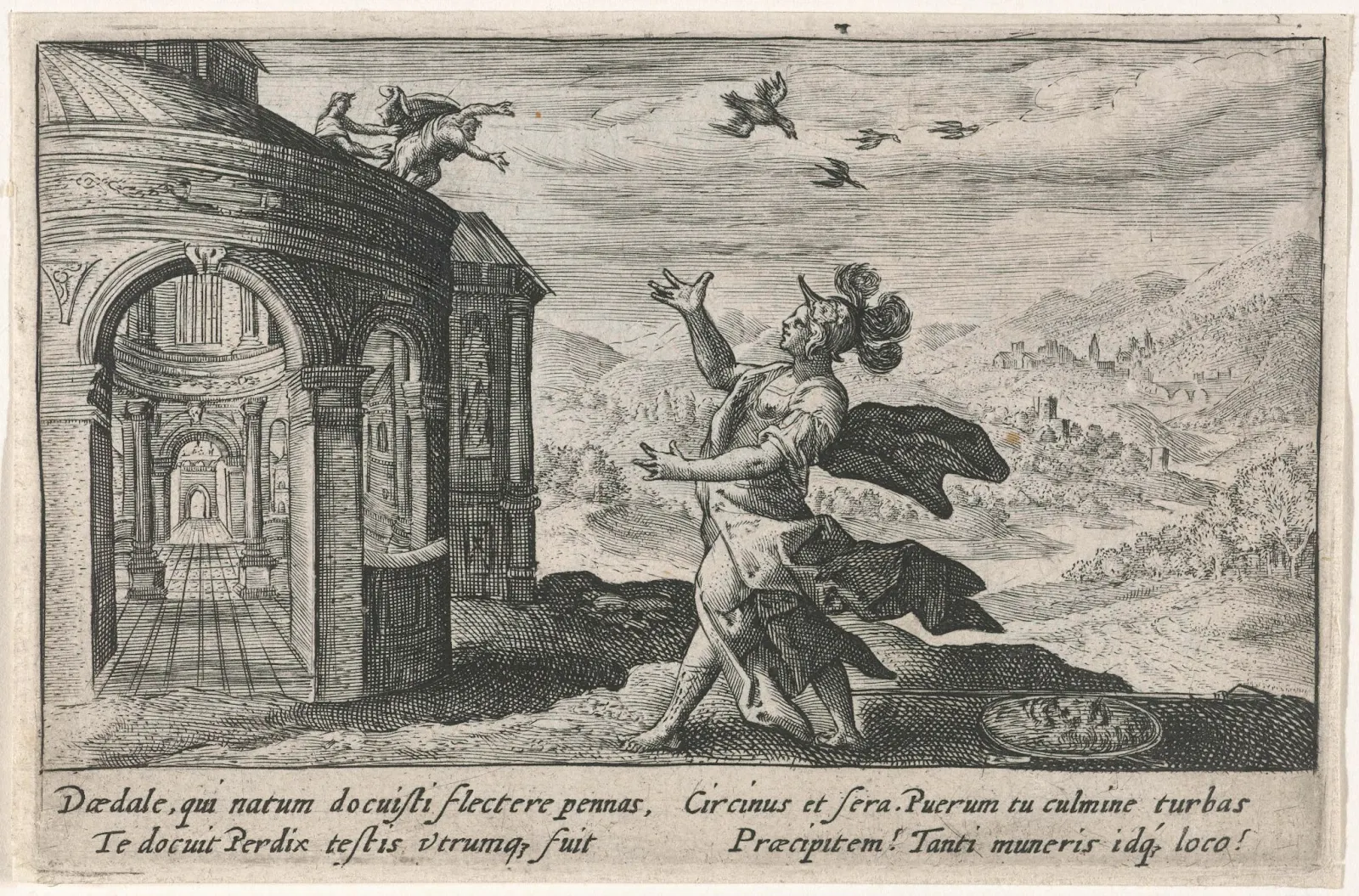
Perdix - The Story of Icarus's Nephew


Perdix was the name of Icarus's nephew and Daedalus's apprentice. The word "Perdix" has meaning in Greek, and it has influenced words in various languages, including the international language. In Greek, the word "Perdix" (Περδίκκας) is composed of two words: "peri" (περί) meaning "around" or "concerning," and "dike" (δίκη) meaning "justice" or "judgment." Therefore, the meaning of the name "Perdix" is "he who cares for justice" or "he who surrounds justice." The name "Perdix" was common in ancient Greece.

From the Greek word "Perdix," words in various languages have been derived, such as Perdrix in French and English, where it is the name of the partridge bird, which runs on the ground but is unable to fly.

In these languages, the word "prediction" is also derived from the word "Perdix," meaning prophecy or forecasting.

In philosophy and literature, the word "prediction" is used to describe the process of predicting or forecasting future events based on existing knowledge. The word also symbolizes the search for justice and truth, the desire to understand the world and act morally.

Perdix was the son of Daedalus's sister, and he learned the art of construction and engineering from his uncle. He was a very talented young man, a brilliant student, and even invented innovative tools like the saw. Unfortunately, his story ended in tragedy: Daedalus, who felt jealous of his nephew's talent and feared that he would take the place of his beloved but slower natural son, Icarus, pushed Perdix from the roof of the temple of Athena. The goddess of wisdom took pity on Perdix and turned him into the bird named after him - the partridge. Afterward, Daedalus and Icarus fled to Crete. As punishment for the murder, Daedalus was ultimately condemned to witness the death of Icarus falling from the sky with the wings he had built for him.

Sometimes parents want their children to fulfill at all costs the dreams that they themselves failed to achieve. The father wants his son to continue the marathon race that he started but failed to finish. Now it is the son's turn to continue from that point and win. There is a significant difference between the desire for the son to fulfill the father's dreams at all costs and the desire for the son to conservatively take his place. Continuing the path at all costs reflects an expectation that the son will fulfill the father's hidden dreams and desires, which is what Daedalus sought for his natural son Icarus to fulfill. The worldview that reflects an expectation that the son will conservatively fill the role that the father filled and inherit his profession and status is similar to the role that Perdix filled. Both approaches, if not balanced, can lead to a tragic end. The story of Daedalus, Perdix, and Icarus may serve as a warning sign and illuminate the complexity of transferring legacy and expectations between generations.

The character of Perdix, in the context of the invention of the saw, teaches about the preference for systematicity and immediacy over the aspiration to fulfill dreams. Daedalus was the son of the king of Athens, and it is possible that his true desire was to be the heir to the throne. Perdix, on the other hand, represented a more practical and rational approach, aimed at achieving control and order in the world. His character can be interpreted as representing the practical and rational side of human nature. Unlike Daedalus, he is not drawn to big dreams or long-term plans. He prefers the immediate, the obvious, what can be achieved here and now. The saw, as a working tool, symbolizes dismantling and cutting. Icarus, on the other hand, following his father's desire, represents the desire for freedom and breaking boundaries. He prefers the dramatic experience, even at the cost of risk and self-destruction.

Organizations constantly face the need to make decisions, both small and large. Often, these decisions involve a dilemma between maintaining the status quo and innovating and taking risks. The characters of Perdix and Icarus are suitable to serve as different metaphors for the ways in which organizations approach the decision-making process:

Perdix represents the analytical approach, the attempt to predict the future. Organizations that operate like Perdix invest significant resources in collecting and analyzing data to make informed and rational decisions. This approach can lead to growth and innovation, but also to paralysis and slow decision-making. These organizations prefer to stay in their comfort zone and make decisions based on prior knowledge and experience. This approach can be effective in the short term, but it can lead to stagnation and lack of development in the long run.

Icarus, on the other hand, represents the innovative approach, the desire to fulfill dreams and break boundaries. Organizations that operate like Icarus encourage creativity, initiative, and risk-taking. This approach can lead to breakthroughs and the creation of significant value, but also to failures and painful falls. Like Icarus, these organizations strive for innovation and are not afraid to take risks. This approach can lead to dazzling success, but it also carries the risk of failure.

Despite their revolutionary contribution, inventions like the jet plane and the video cassette can also be seen as examples of the preference for immediacy. Similar to the saw, which allows for quick cutting and dismantling, the video cassette and the jet plane offer quick and efficient solutions to human needs. These inventions allow people to control time and space, streamline processes, and shape reality according to their wishes. Both inventions contributed to the rise of consumer culture, where the immediate satisfaction of desires becomes a central value.

Before the invention of the video cassette, watching movies was limited to screening times in cinemas or television broadcasts. The video cassette made it possible to watch movies anytime, anywhere, immediately, without dependence on an external schedule. It gave the viewer complete control over the content, with the ability to pause, rewind, and jump between different segments.

The jet plane dramatically shortened flight times and made it possible to reach distant destinations quickly and easily. It allowed people to overcome the limitations of time and space and experience the world immediately and in the present, and it significantly contributed to the processes of globalization, which are characterized, among other things, by the rapid pace of information and goods exchange.


Daedalus pushes Perdix from the roof to his death, 

and the goddess transforms him into a partridge during his fall.


Monday, December 23, 2024

Subtitles in Cinema


Two technological inventions of the 20th century, namely radio and cinema, revolutionized the way people consume information, communicate with each other, and develop literacy skills. It can be argued that the impact was multi-layered, encompassing both oral skills (speaking and listening) and reading abilities.

Radio, as a communication tool based on sound, significantly contributed to the development of oral skills. It created an "auditory richness" by exposing the general public to a wide range of voices, accents, and speaking styles. Announcers, actors, politicians, and commentators became role models, and listening to radio broadcasts became a popular pastime that indirectly contributed to the improvement of oral expression. People could learn new words, improve their diction, and be exposed to persuasive rhetoric, all without reading a written text. Radio, therefore, served as a source of oral inspiration for all of humanity, making knowledge and entertainment equally accessible to everyone, regardless of their reading ability.

With the advent of talking pictures, the impact on oral skills intensified. Viewers not only listened to the characters but also watched them, absorbing their body language, facial expressions, and intonations, which enriched the auditory experience and made the role models more complex and convincing. Talking pictures created stars who became cultural icons, and the way they spoke, behaved, and dressed greatly influenced the audience, further contributing to the development of language and interpersonal communication.

However, the contribution of cinema to the development of literacy did not stop at the development of oral skills but also extended to reading abilities. Even in the silent film era, the intertitles that were inserted between scenes played an important role in understanding the plot. They forced viewers to read, thereby contributing to the improvement of reading skills, even if on a basic level. The introduction of talking pictures did not negate the importance of subtitles but rather enhanced it. Subtitles, which have become an integral part of the cinematic experience, allowed viewers to connect the sound with the written word, thereby strengthening the connection between the spoken and written language.

In the modern era, it can be argued that subtitles in films and television series have, to some extent, become a substitute for traditional reading. The visual power of cinema allows it to dispense with lengthy verbal descriptions and convey a great deal of information through image, sound, and pace. Subtitles, in this case, complement the visual experience and provide the information necessary to understand the plot and dialogues. For many viewers, especially young people, reading subtitles has become the preferred way to consume narrative content, as it combines visual and auditory stimulation with reading, making the experience more dynamic and engaging.

The inventions of radio and cinema greatly contributed to the development of literacy skills, both oral and written. They created role models, made knowledge and culture accessible, and provided a new platform for learning and language development. In the digital age, where we are inundated with visual content, the importance of subtitles is only growing, and they may become one of the main tools for preserving and developing reading skills in future generations.


Light and Flight


The word "light" holds a fascinating duality, encompassing both "illumination" and "lightness." An additional layer in English, "flight," adds a captivating dimension of escape, ascension, and soaring, much like the act of flying. This connection between light, lightness, and flight recurs throughout history in numerous works and can also be found in the works of great thinkers.

For instance, Albert Einstein incorporated "light" into his famous equation, E=MC², thereby linking the immense energy contained within matter to the speed of light. His theory of relativity demonstrates how movement at high velocities, approaching the speed of light, affects the perception of time and space, creating a sense of expansion and elevation, a kind of "flight" into new realms of cosmic understanding.

Similar to Einstein, the Greek poet Odysseus Elytis connected the external light, the bright sunlight of Greece, with the lightness of the soul and its liberation from the heavy mass of the oppressive past. His work is akin to a journey, a poetic "flight," in which a person rises above the shadows of the past, shakes off the weight of burdens, and ascends toward light and freedom. His poems are filled with images of light, sea, sky, and birds, symbolizing the aspiration for spiritual elevation, to escape ("flight") from the confining reality into the expanses of imagination and creation.

The connection between light, lightness, and "flight" is also distinctly expressed in the art of cinema. Cinema, as an art based on light and shadow, uses lighting to create atmosphere, emphasize emotions, and tell a story. Moreover, camera movement, which often simulates the motion of flight or hovering, contributes to the sense of "flight," of detachment from the ground and from everyday reality. Many films use visual imagery of flight, either explicitly, such as in scenes of airplane or spaceship flights, or implicitly, through high-angle shots, flowing camera movements, and the use of special effects that create an illusion of levitation. In many films, physical or metaphorical flight serves as a means of expressing the desire for freedom, spiritual elevation, and the crossing of boundaries.

The connection between "light" in its various meanings – illumination, lightness, and "flight" (escape, aviation) – highlights the link between the physical world, the world of matter and energy, and the spiritual world, the world of emotion and imagination. Sunlight, as well as cinematic light, as a symbol of knowledge, truth, and freedom, enables "flight," the spiritual elevation and liberation from all that binds us, whether it be physical or emotional weight.


Friday, October 25, 2024

The Airplane - Dream and Reality


The Dream of Flight

The concept and aspiration of flight have captivated humanity since the dawn of history. Bound to the earth, humans gazed enviously at the birds soaring above, dreaming of the day they could join them and conquer the skies. Numerous attempts were made to imitate the flight of birds, from mythological tales like Icarus and Daedalus to the daring experiments of inventors throughout the ages. Yet, despite these earnest endeavors, most attempts ended in disappointment and failure. Successes were few, flights were short and unstable, and the dream of safe and efficient flight seemed further away than ever. Humanity realized that conquering the skies required a significant technological breakthrough.


False Dawns

This breakthrough arrived in the form of three remarkable inventions that promised to revolutionize the world of aviation: the hot air balloon, the airship, and the glider. Each sparked great excitement and curiosity, and it seemed that humanity had finally found the way to conquer the air. However, despite their initial promise, within a relatively short period of a few decades, these three inventions proved unsuitable for realizing the full vision. The hot air balloon was at the mercy of the winds, the airship was cumbersome and vulnerable, and the glider had limited control over its flight path. These inventions became resounding failures, leaving humanity disappointed that the technology capable of carrying masses of people into the skies had not yet been found.


The Wright Brothers' Triumph

But then, with the invention of the airplane by the Wright brothers at the beginning of the 20th century, the picture changed completely. The airplane, with its innovative design, efficient wings, and sophisticated control system, finally proved that the skies could be conquered safely and efficiently. It ushered in a new era of possibilities, revolutionizing transportation, commerce, military, and culture. Unlike the failed flying machines that preceded it, the airplane has proven to be a promising invention for over a century, continuing to evolve at a dizzying pace, from piston-engine aircraft to jet aircraft and sophisticated unmanned aerial vehicles.


Taking Flight and Expanding Minds

The invention of the airplane not only fulfilled humanity's dream of flight but also opened up new possibilities for spatial thinking and perception of the world. The airplane's complete control over movement in the air fulfilled another long-held dream of humanity: the unlimited expression of perspective, the three-dimensional thinking that deepens our understanding of spatial relationships, a cognitive tool of the highest order. The ability to move freely in three-dimensional space changed the way we perceive the world and the relationships between objects within it.


Dreamers and Doers

Throughout the development of modern aviation, those involved were divided into two types: dreamers and doers. The dreamers envisioned fantastic visions of effortlessly conquering the air, imagining floating cities and fantastical flying machines. But alongside the dreamers were the doers, the engineers, inventors, and pilots who progressed step by step, experiencing failures and losses along the way. Progress in aviation was the result of a combination of bold vision and meticulous work, of wild imagination and complex engineering reality.


Aviation as Ideology or Tool

In parallel to technological development, two social and political approaches to the idea of aviation emerged: aviation as consciousness and aviation as awareness. Societies that championed aviation as consciousness saw it as a dreamlike vision, capable of uniting their underdeveloped nations and propelling them to the forefront of modernity. Aviation served as an ideological tool for shaping national consciousness and fostering pride and patriotism. Societies that championed aviation as awareness saw it merely as a means to advance the individual and society, carefully avoiding its transformation into an ideological tool. Aviation was perceived as a useful tool for transportation, commerce, and research, but not as a defining factor of national identity. This difference in approach highlighted the distinction between dictatorships and democracies in the 20th century, with dictatorships advocating aviation as consciousness and democracies advocating aviation as awareness.


Anthropomorphism:

Aviation's Third Way

Between the world of dreamers and the world of doers, between aviation as consciousness or awareness, exists a third perspective that allows us to understand the significance of aviation and its unique place in the human experience: the perspective of anthropomorphism. While dreamers aspire to transcend the limitations of physical reality and fly on the wings of imagination, and doers focus on realizing dreams through technology and development, anthropomorphism bridges the two worlds. It allows us to perceive the airplane not just as a flying machine, but as an entity with human qualities, a kind of "flying human" that fulfills the dreams of both worlds.


Holistic Experience

Aviation, as perceived from this perspective, is not just physical movement through space, but also a journey of consciousness and spirit. It allows us to experience the world from a new perspective, to rise above the limitations of everyday life, and to feel a sense of freedom and liberation. The anthropomorphism of the airplane allows us to understand aviation as a holistic experience, combining dream and reality, consciousness and action, and the human being with the world. It gives a deeper meaning to the experience of flight, transforming it into a meaningful human journey.


Enduring Power of Anthropomorphism

Anthropomorphism is a powerful tool that enables us to understand human history. Through it, we perceive historical events as the result of human actions, decisions, and their consequences. This approach allows us to understand motives, identify with the past, take responsibility, prevent dehumanization, and understand history as a human creation. Anthropomorphism, despite being an ancient source, remains important today, especially in light of the increasing emphasis on personal development at the expense of social development, which leads to a growing need for people to rely on their immediate tangible environment and seek meaning and support in sources like anthropomorphism, as a response to the social disconnect created by technology.


The Airplane as Icarus

The airplane, with its nose resembling a head, wings spread like arms, and a rear body and tail simulating legs, becomes an anthropomorphism of the human body. This image, echoing "Jesus on the cross" or "a man spreading his wings" against the backdrop of the clouds – a central source of inspiration for anthropomorphism – evokes deep religious and spiritual associations. It reinforces the idea that aviation, as an intense and personal experience reminiscent of spiritual flight, may contribute to the rise of extremist regimes. However, it is important to remember that the rise of such regimes is influenced by many other factors, and aviation and the anthropomorphism of the airplane are only one contributing factor to this phenomenon, alongside other social, economic, and political factors.


Shared Wings of Aviation and Cinema

Feature films, like airplanes, are a clear expression of anthropomorphism. Both are technologies that allow us to experience the world in a new and powerful way, and both use anthropomorphism to create a deeper emotional experience. The airplane, in its human-like form, evokes feelings of freedom and liberation reminiscent of spiritual experiences. Cinema breathes life into characters and stories through a variety of techniques, creating imaginary worlds that feel real. Both create an illusion of reality, use movement, evoke emotions, and enhance the human experience. Cinema, in addition, turns human stories into a collective dream and uses symbols and metaphors to convey complex messages and ideas.


The Domino Effect That Led to World War I

Only ten years and 226 days separated the Wright brothers' first flight in 1903 from the outbreak of World War I, yet the connection between them runs deeper than expected. This decade, which witnessed the birth of the aviation age, was saturated with rising geopolitical tensions, extreme nationalism, arms races, and imperialist competition. These factors, coupled with a complex alliance system and recurring international crises, created fertile ground for the eruption of a global war. The assassination of the Austrian Archduke was merely the spark that ignited the flames of war already smoldering beneath the surface. The Balkan Wars, which preceded World War I by a few years, further exacerbated tensions, influenced the alliance system, and served as a "dress rehearsal" for the great conflict.

World War I erupted as a result of a "domino effect," a chain reaction of events where each event triggers the next, similar to dominoes falling one after another. Both the invention of the airplane and the invention of cinema were based on the understanding of continuous motion, and can be seen as expressions of the domino effect. In both cases, a chain of small, sequential events creates a significant outcome: the airplane depends on constant motion in the air for flight, and in cinema, a sequence of still images creates the illusion of motion and life on screen.

The domino effect that led to World War I was exacerbated by the invention of the airplane, which heightened political instability and impacted the global balance of power. The airplane influenced the military aspect, increased the potential for escalation, and altered the balance of power. Similar to the airplane, cinema also contributed to the domino effect: it reinforced nationalism and shaped public perception of war. Furthermore, both the airplane and cinema, which emerged and developed in the late 19th and early 20th centuries, stood in stark contrast to the prevailing spirit of the era dominated by absolute monarchies. These regimes emphasized obedience, conformity, and centralized control, while the airplane and cinema symbolized freedom, independence, and critical thinking.

This connection between technology, consciousness, and war is also emphasized in Giulio Douhet's book "The Command of the Air," which predicted the central role of air power in future wars. The inspiration for writing the book stemmed from the author's participation in the Italo-Turkish War of 1911-1912. During this war, the author witnessed firsthand the aerial bombings carried out by Italian forces, a first in history. They profoundly influenced his perception of the future of warfare, which he envisioned as based on the subjugation of the civilian rear in cities through strategic bombing.

Today's drone and missile attacks, coupled with the growing use of the internet, are not merely a continuation of Douhet's theory, but also a contemporary manifestation of the enduring influence of the airplane and cinema on the nature of warfare. They underscore how technology and visual media are employed to achieve military and political objectives, and the complex challenges confronting societies grappling with these threats.


Saturday, October 19, 2024

The Illusion of Movement in Gliding and Cinema


The glider, much like a leaf carried by the wind, moves along with it and remains stationary relative to the air. It stays at the same point within the air mass, as if it were a part of it. Only the movement of the landscape and the ground below reveals that it is indeed in motion. At times, despite moving through the air, a skilled pilot can harness the air currents and lift forces to stabilize the glider, creating a sensation of hovering, as if frozen in place despite the movement of the air.

The high-speed camera can also "freeze" motion. It captures images at an extremely high shutter speed, effectively "freezing" the movement of the subject and allowing us to see sharp, clear details even in rapid motion, like a bird's wings mid-flight or water droplets suspended in the air.

In both cases, it is the ability to control the perception of movement and create an illusion of stillness.


Gliding means many things to many different people. For some, it's a hobby and a way to meet like-minded individuals. For others, it's an affordable way to take to the skies. For many, it's an adventurous sport akin to car racing or aerobatics. But for all, it offers a quiet and peaceful way to fly without an engine. Gliding is the closest humans can come to experiencing the flight of a bird. Gliders are propelled solely by air currents and gravity, soaring silently through the skies, sometimes for hours at a time. They allow the pilot to experience the world from a different perspective, from a bird's-eye view.

Much like surfing, where the surfer "rides" the waves and harnesses the forces of nature, in gliding, the pilot becomes one with the wind, utilizing air currents to soar and navigate. The sense of freedom and tranquility, the detachment from the ground, and the connection to the forces of nature are values shared by both activities. This may be why gliding also attracts people from the alternative youth culture, who seek an authentic connection with themselves and their surroundings.


Cinema, a universal language and a powerful medium, stands at the crossroads of art, industry, technology, and politics. We owe its existence to daring inventors and artists who experimented with new technologies and sought to capture fragments of reality, creating an entirely new way of looking at the world. Before the era of digital, video, and celluloid, film was born as a collection of still images, projected one after another at high speed, thus creating the illusion of movement.


Tuesday, September 24, 2024

Drones as Litany

The word "Litany" has a few different meanings, but the most common one is:

A long and repetitive list or series of something, usually complaints or problems.

For example:

“The customer service representative had to listen to a litany of complaints about the faulty product.”

“The politician’s speech was just a litany of empty promises.”


The word originates in a religious context:

‘’Litany’’ is a prayer that includes a series of requests or supplications from the worshipper or the prayer leader, followed by repetitive responses from the congregation or group of worshippers.


For example, in a traditional prayer, the cantor might say "God! Please have mercy" and the congregation would respond "Have mercy, please have mercy." This repetition creates a sense of call and response, or a dialogue between the leader and the congregation.


The word's origin is in ancient Greek, λιτανεία (litaneía), which means "prayer, supplication." From there it passed into Latin (litania) and finally into English.


Although its religious origin is still in use, today the word litany is mostly used in a broader context to describe any long and repetitive list, usually of complaints or problems.


So, when someone says "a litany of..." they are emphasizing the length and repetitiveness of the list, often with a slightly negative connotation.

In the context of ‘’Drones’’ as the nickname inspired by the meaning of the word "refrain" for UAVs or unmanned aerial vehicles, the word "litany" can be used to describe: a list of negative claims or concerns about drones.


In these days of reciting the Selichot prayers in preparation for the eve of Rosh Hashanah, the supplications uttered in the wee hours of the night chillingly echo the harsh reality of the military conflict unfolding on the banks of the Litani River.